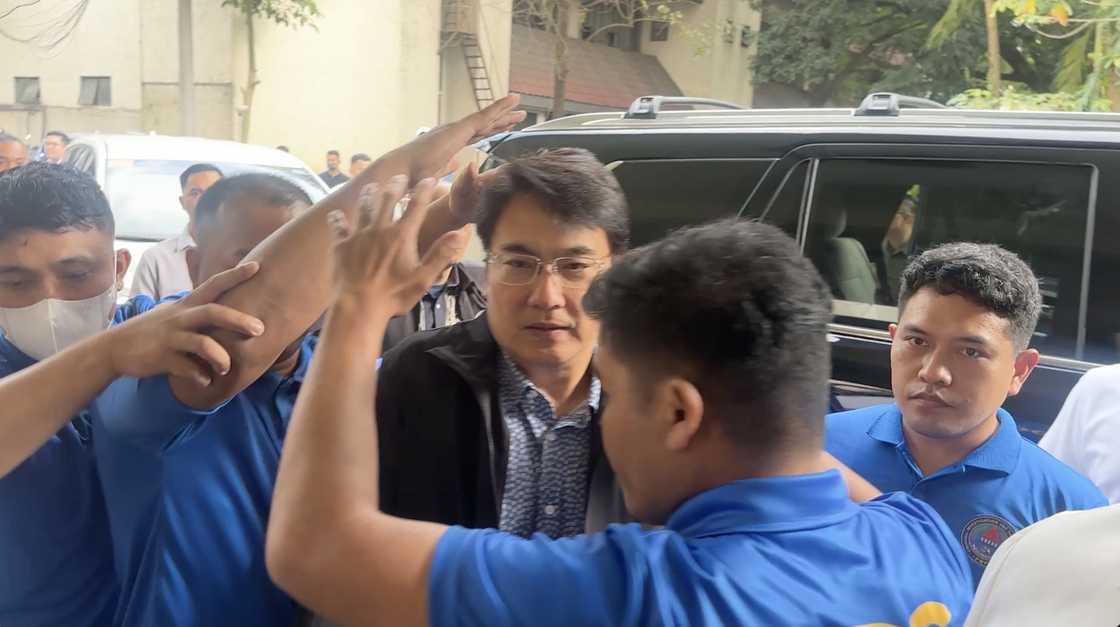
Inside the Warrant of Arrest and the Voluntary Surrender of Ramon “Bong” Revilla Jr.
Published on January 22, 2026
INTRODUCTION
In Philippine politics, few figures embody the uneasy intersection of celebrity, power, and controversy as clearly as Ramon “Bong” Revilla Jr. A former movie star turned senator, Revilla has spent decades navigating both public admiration and persistent legal scrutiny.
When news broke that the Sandiganbayan had issued a warrant of arrest against him—followed hours later by his voluntary surrender—the development sent shockwaves through political circles and the general public alike. For many Filipinos, the moment felt hauntingly familiar, recalling earlier corruption cases that once placed Revilla behind bars and at the center of a national reckoning over accountability.
This article examines in detail the warrant of arrest issued against Revilla, the legal basis behind it, the sequence of events that led to his surrender, and the broader implications for the justice system. It is not a judgment of guilt, but a comprehensive account of process, context, and consequence.
TABLE OF CONTENTS
- Ramon “Bong” Revilla Jr.: A Political Life Under Scrutiny
- The Case That Led to the Arrest Warrant
- Understanding the Charges Filed
- The Sandiganbayan and Its Authority
- Issuance of the Warrant of Arrest
- The Hold Departure Order Explained
- The Decision to Surrender
- The Night of the Surrender at Camp Crame
- Detention, Custody, and Court Orders
- Legal Implications and What Comes Next
1. RAMON “BONG” REVILLA JR.: A POLITICAL LIFE UNDER SCRUTINY

Ramon Revilla Jr. is no stranger to public controversy. Rising to fame as a popular action film star before entering politics, he leveraged celebrity appeal into electoral success, serving multiple terms as senator.
Yet his political career has been repeatedly shadowed by allegations of corruption. Supporters have portrayed him as a victim of political persecution, while critics argue that his longevity in public office reflects systemic weaknesses in accountability.
This duality—public figure and perpetual respondent—forms the backdrop against which the current case unfolds.
2. THE CASE THAT LED TO THE ARREST WARRANT
The arrest warrant stems from a criminal case filed before the Sandiganbayan involving alleged irregularities in a government-funded flood control project in Bulacan.
According to the prosecution, the project was reported as completed despite evidence suggesting that little to no work was actually carried out. Funds were allegedly released, liquidated, and documented through falsified records.
The case was initiated following an investigation by the Office of the Ombudsman, which found probable cause to charge Revilla and several government officials.
3. UNDERSTANDING THE CHARGES FILED
Revilla faces charges including malversation of public funds and falsification of public documents. These are serious offenses under Philippine law, particularly when public money is involved.
Malversation, in particular, is treated with severity because it directly concerns the misuse of taxpayer funds. When charged as a principal offender, the offense may be classified as non-bailable depending on the circumstances and evidence presented.
Legal analysts note that these charges differ from mere administrative violations; they strike at the core of public trust.
4. THE SANDIGANBAYAN AND ITS AUTHORITY
The Sandiganbayan is a constitutionally mandated anti-graft court tasked with trying cases involving public officials accused of corruption.
Its jurisdiction includes high-ranking officials such as senators, cabinet members, and senior government executives. Decisions made by the court carry significant legal and political weight.
Once the court determines probable cause, it has the authority to issue warrants of arrest and hold departure orders without public hearings.
5. ISSUANCE OF THE WARRANT OF ARREST
After evaluating the information and supporting evidence submitted by the prosecution, the Sandiganbayan found sufficient probable cause to issue a warrant of arrest against Revilla and his co-accused.
The warrant was released through official channels and transmitted to law enforcement agencies for implementation. At this stage, the court does not determine guilt—only whether evidence exists to justify arrest and trial.
The issuance of the warrant marked a critical turning point in the case.
6. THE HOLD DEPARTURE ORDER EXPLAINED
Alongside the warrant of arrest, the court issued a Hold Departure Order (HDO). This directive prevents the accused from leaving the country while the case is pending.
HDOs are commonly issued in high-profile cases to ensure that defendants remain within the court’s jurisdiction. The order reflects the court’s assessment of flight risk rather than guilt.
For Revilla, the HDO effectively closed any legal avenue for travel abroad during the proceedings.
7. THE DECISION TO SURRENDER
Hours after news of the warrant became public, Revilla announced his intention to surrender voluntarily.
Legal experts note that voluntary surrender can be a strategic decision. It signals cooperation with authorities, avoids the optics of arrest, and may be considered a mitigating factor during sentencing if conviction occurs.
Revilla’s camp maintained that the decision was motivated by respect for the law and confidence in eventual vindication.
8. THE NIGHT OF THE SURRENDER AT CAMP CRAME
On the evening of the surrender, Revilla arrived at the headquarters of the Criminal Investigation and Detection Group at Camp Crame.
Authorities confirmed that the warrant was formally served and that Revilla was informed of his constitutional rights. Standard booking procedures followed, including documentation and medical checks.
The scene—quiet but symbolically heavy—stood in stark contrast to the spectacle often associated with high-profile arrests.
9. DETENTION, CUSTODY, AND COURT ORDERS
Following the return of the warrant, the Sandiganbayan issued a commitment order placing Revilla under detention at a designated facility.
While bail may be allowed for certain charges, the presence of a non-bailable offense meant that Revilla remained in custody pending further court proceedings.
Detention conditions and placement were determined by the court in coordination with law enforcement agencies.
10. LEGAL IMPLICATIONS AND WHAT COMES NEXT
The issuance of a warrant and the surrender mark only the beginning of a lengthy judicial process.
The next stages include arraignment, pre-trial proceedings, presentation of evidence, and witness testimony. Legal experts caution that cases of this nature often take years to resolve.
For Revilla, the outcome will carry not only legal consequences but profound political and reputational implications.
CONCLUSION
The warrant of arrest and subsequent surrender of Ramon “Bong” Revilla Jr. represent more than a single legal event. They reflect the enduring tension between power and accountability in Philippine public life.
While the courts will ultimately determine guilt or innocence, the case has already reignited public debate over corruption, justice, and the rule of law. In a system often criticized for delay and inequality, the proceedings ahead will be closely watched—not just for their outcome, but for what they reveal about the state of Philippine democracy.
RELATED ARTICLES
- Inside the Sandiganbayan: How High-Profile Corruption Cases Are Tried
- From Celebrity to Defendant: The Political Cost of Legal Battles
- Malversation and Public Trust in Philippine Governance
- Voluntary Surrender and Its Legal Consequences