The valley woke to the sound of forks and friendly gossip. In Acme, Washington, people ate breakfast at the diner where the server knew their order, picked up screws and seed at the general store, and left their doors unlocked because that was how life worked—until the weekend everything changed.
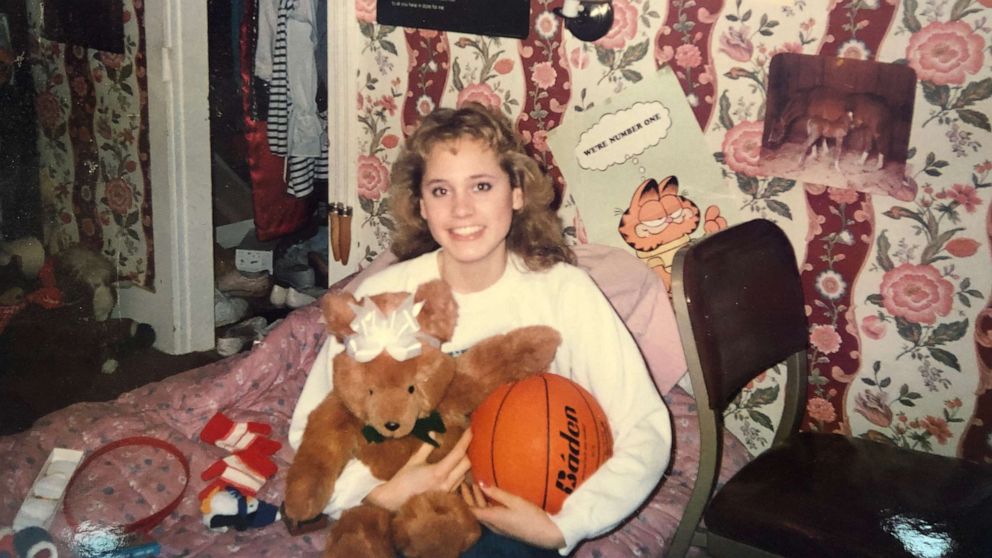
On November 24, 1989, Mandy Stavik laced her shoes and took her German shepherd, Kyra, out for a run. A few neighbors saw her—ponytail, long stride, that easy runner’s rhythm—and then the road curved and swallowed her.
Kyra came home without her.
“When she didn’t come back, I panicked,” her mother, Mary Stavik, would say. The community surged out into the fields and along the riverbanks. Deputies, volunteers, neighbors—everyone looking.
Three days later, on the South Fork of the Nooksack River, detective Ron Peterson guided a Zodiac into a side channel. He saw a flash of pink. Shoes. Socks. A body floating face‑down.
“When I rolled her over,” Peterson remembers, “it was a shock. She looked like my daughter.”
He lifted her from the water and, as a father would, whispered, I’ve got you.
Acme lost something that day—its sense of innocence. Nearly a thousand people came to Mandy’s memorial. Her former coach Jim Freeman spoke of a girl who locked eyes and smiled like she loved life itself. Mandy was class of ’89: No. 13 on the basketball court, a cheerleader, a top student, once dreaming of piloting planes. Her older sister Molly Brighton called her larger than life—bright, driven, always reaching for the best.
The day after Thanksgiving, Mandy had jogged a familiar route. Rookie deputy Kevin Bowei (later Detective Kevin Bowie) would trace it again and again. She left the family home, turned west along Strand Road. A man in a pickup saw her cross and head toward a wooded bend—an eighth of a mile from home. Bowie believes she was abducted there.
“It had to be a vehicle,” he says. “She was too fast to catch on foot. A gun, most likely. Point it, say Get in. At that point, she complies.”
Investigators think the attacker kicked Kyra into a ditch, then drove Mandy three and a half miles, assaulted her, and when she fled—scratches on her arms and legs told the story—caught her, struck her, and placed her in the river so she would drown.
Peterson had recently been trained by the FBI in preserving DNA. The current tugged; time was a threat. He moved carefully. At autopsy, they recovered male DNA—semen—confirming a sexual attack.
Detectives fanned out. They checked the drifter David Suchy seen nearby. Warrant. DNA. Not a match. They interviewed Mandy’s boyfriend Rick Zender. Not a match. In all, about thirty local men gave samples. No match. The case went cold. For Acme, it felt like a crime committed against everyone.
Almost twenty‑five years later, a break came from a place no one expected: a water park lawn where two moms watched their kids on the slides.
Heather Backstrom turned to Marilee Anderson. “I’m sure I know who killed her.”
Marilee blinked. “I do too.”
They had both gone to Mount Baker High. They barely knew each other, and neither had ever told law enforcement what they suspected—not in a small town where naming a neighbor could blow back. But sitting there in the sun, the name they had each carried for decades came out: Timothy “Tim” Bass.
Heather remembered being fifteen—cutoff sweats after a softball game, a ride to Dairy Queen in the back of a friend’s pickup. Tim, in his twenties, sat beside her, told her her eyes were beautiful, then slid a pen along the bare skin of her knee. Fear. Frozen nerves. She was a kid.
Marilee’s story cut colder. In July 1991, after dark, a knock at her door. Tim Bass stood there asking to use the phone—said he’d been hunting and needed to call his wife. She handed him the receiver; the line was dead. Beep‑beep‑beep and a recording: disconnected. Tim walked through the kitchen toward her bedroom. He said he drove by often. Said he’d been in love with her. Said he wanted to make love right then. She told him to leave. He didn’t. Terror rose. Only when she threatened to call police did he go.
They contacted Detective Ken Gates, another Mount Baker alum. Gates looked at a map and felt the air thin: in 1989, Tim Bass lived less than two miles from the Stavik home, right along Mandy’s route. Back then, no one had asked Tim, his brother, or his father for DNA. The family was well‑liked. Somehow, they were overlooked.
By then, Tim had been living quietly—married, three kids, delivering bread for a bakery. No obvious record. When detectives knocked, they were gentle.
“Mandy?” Tim squinted. “Mandy, Mandy… oh yeah, the girl they found on the river.”
Who could forget Mandy? they thought. They asked for a saliva sample. Tim wouldn’t give it.
“I watch crime shows,” he said. “People go to prison because they give DNA.”
So they tailed him on his bakery route, hoping he’d toss a cup or bottle. Night after night: no luck. The case teetered, again.
Then the call came from the bakery itself. Tim’s boss, Kim Wagner, had talked with detectives and figured out what they needed.
“You want DNA, don’t you?” she said. “I can get it for you.”
Kim kept the break room trash empty—waiting for a fresh throw. Days stacked into weeks, then months. One afternoon, Tim dropped a plastic cup. Later, a Coke can. Kim’s heart punched her ribs.
Game time. She palmed the can, slid it into her desk, and handed it to police.
She wanted to be wrong. She wanted to believe they hadn’t all been betrayed by the quiet driver who called her “woman” instead of her name. Three months later the crime lab called Detective Bowie.
“Kevin, we’ve got a match.”
Bowie stood there stunned, as if he might wake up. He cried. Then they went to get Tim.
They met him in the parking lot after his shift. Did you know Mandy? “No.” Any relationship? “No.” Not even a kiss? “Never.” Then why is your DNA inside her?
Tim shifted—denial to outrage, outrage to curiosity. “How did you get my DNA?”
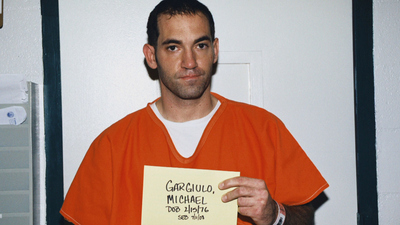
On December 12, 2017—twenty‑eight years after Mandy was pulled from the river—Tim Bass, fifty, was arrested for kidnapping, rape, and murder.
Bowie called Kim. She thought of Mandy first, then asked if the family had been told. Yes. “That’s why I did it,” Kim said softly. “I just never forgot about Mandy.”
Tim swore he was innocent. He had a secret, he said, and it explained everything: he and Mandy had been lovers.
The prosecutor, Dave McEachran, felt the case in his bones. He had been forty‑four when Mandy was killed. At seventy‑three, retired, he came back to try it—and refused pay. In his head and his heart, he needed to finish what Acme started.
In court, the state’s case was simple: the defendant’s DNA was inside Mandy; she was abducted, raped, and murdered. Case closed.
The defense, Stephen Jackson and Stark Follis (joined by Shoshana Page), said otherwise. No kidnapping. No rape. No murder by their client. They floated the bombshell: consensual sex. Mandy had come home for Thanksgiving; she and Tim had met secretly and been intimate within forty‑eight hours of her death. DNA proves contact, not consent.
Why, then, had Tim barely remembered Mandy in 2013, only to remember an affair in 2017? “Because he’s making it up,” the state answered. “He’s covering himself.”
Kim Wagner took the stand—nervous, hands tight—but steady. She told the jury how she got the can because she needed to know the truth.
The defense called Dr. Elizabeth Johnson, a forensic expert, who testified semen might persist for up to two days. The prosecution countered with the original medical examiner, Dr. Gary Goldfogle: Mandy was raped and killed in close sequence, then placed in the river. His findings fit that timeline.
Then came the family. Tim’s ex‑wife, Gina, divorced him after the arrest—and after he claimed an affair with Mandy. She remembered years of control: Get me a drink. Make me food. She remembered him asking his mother to lie—to blame his late father.
“Can we say Dad did it?” he asked. His mother covered her face, paused, and said no.
Tim’s brother Tom took the stand, stomach in knots, sleep torn thin. He told the court Tim had asked him to say he’d slept with Mandy, too—make it look like she “got around.” After the arrest, Tim told Tom everyone was lying, he needed a strong alibi—maybe their mother could say they were Christmas shopping.
The defense replied that innocent people under pressure do strange, desperate things. But the jury now had more than science. They had patterns.
In closing, the defense reminded jurors that no one ever saw Tim and Mandy together, that absence of evidence could not disprove secret meetings. The state asked them to follow the map: abduction point, assault, river, DNA. Hold him accountable.
The jury deliberated. They turned the room into a war room—posters, maps, timelines. Some wondered about doubt. Teenage girls can sneak out, someone said. Maybe there was a secret relationship.
A day later the clerk read the verdicts: Guilty—murder, rape, kidnapping. Nearly thirty years to the day.
Relief broke across the pews like weather. This, Detective Bowie thought, is why we do it.
At sentencing, Molly’s husband, Mike Brighton, spoke for the Staviks. “Timothy Forrest Bass must never be allowed to walk the earth as a free person. Never.”
Tim’s mother, Sandra Bass, told the court her son was not guilty. Tim stood and declared himself “one hundred percent innocent,” said he hadn’t received a fair trial, then yielded the day to the Stavik family.
The judge gave him the maximum—nearly twenty‑seven years. Because the state had not charged premeditated murder, life was off the table. Still, the court noted, Tim had lived free for three decades while others shouldered the weight of his acts—his mother, his brother, his ex‑wife, his children.
Mary Stavik, who once believed the case might never be solved, felt something like closure. “They got the guy who did it,” she said. “If he ever gets out, his life will be practically over.”
Tom Bass wondered aloud if other women—maybe even Heather or Marilee—might have been next. The thought chilled him. The women were grateful to be alive and proud of what they’d done.
“In the end,” Kim said, “three women’s word and experiences took him down. It took a village. The Sheriff’s Office never gave up on Mandy.”
The river still runs cold through Acme, and the diner still opens early. The community, a little older now, breathes easier. They remember the girl who smiled with her eyes, who loved life, who went for a run and didn’t come home. They remember the moms at the water park, the boss with the Coke can, the detective who whispered, I’ve got you.
And they remember why you keep working cold cases: because sometimes, after thirty years, the right voice speaks up, and a town becomes whole again.